
Safety and code compliance are two of the most important considerations when designing and installing railing systems. Whether a contractor is working on a residential deck, a commercial staircase, or an elevated walkway, the finished railing must provide dependable protection while meeting applicable building requirements.
For fencing contractors and construction professionals throughout Florida and the Southeastern United States, understanding railing regulations can help prevent costly installation mistakes, project delays, and potential liability issues.
With over 30 years of fabrication experience, Statewide Fence Wholesale supplies vinyl and aluminum railing systems for residential and commercial applications. Choosing quality materials and understanding proper installation requirements are essential steps toward delivering railing systems that perform reliably for years to come.
Understanding Railing Codes and Safety Requirements
Building codes establish minimum safety standards for railing systems, helping reduce the risk of falls and other accidents. However, these requirements can vary depending on the type of property, the railing’s location, and the jurisdiction overseeing the project.
Residential railing systems are generally governed by residential building codes, while commercial installations may be subject to additional structural, accessibility, and safety requirements.
In Florida, contractors should reference the applicable Florida Building Code and any local amendments before beginning installation. Projects elsewhere in the Southeast may follow different adopted editions of the International Residential Code (IRC) or International Building Code (IBC).
It’s also important to distinguish between guards and handrails. Guards help prevent falls from elevated surfaces, while handrails provide support when using stairs or ramps. Some installations require both, and each serves a different safety function.

Key Railing Dimensions Contractors Should Know
Proper railing dimensions are essential for safety and compliance. While exact requirements depend on the project and applicable code, several measurements commonly influence railing design.
| Railing Feature | Common Residential Requirements | Common Commercial Requirements |
|---|---|---|
| Guard Height | Typically 36 inches minimum | Typically 42 inches minimum |
| Stair Handrail Height | Generally 34–38 inches | Generally 34–38 inches |
| Guard Opening Limitations | Commonly restrict passage of a 4-inch sphere | Commonly restrict passage of a 4-inch sphere |
| Structural Strength | Must meet applicable load requirements | Must meet applicable load requirements |
| Accessibility | Depends on project and application | ADA and applicable accessibility standards may apply |
These are general reference values based on common model-code provisions, not universal requirements. Exceptions, including stair guards, certain occupancies, and local amendments, may change the required dimensions. Contractors should verify the adopted code and approved plans for each project.
Understanding these measurements early in the design process helps contractors select appropriate railing components and avoid unnecessary modifications during installation.
Choosing Between Vinyl and Aluminum Railing Systems
Material selection plays an important role in railing safety, durability, and long-term maintenance. Two popular options for residential and commercial applications are vinyl and aluminum railing systems.
Vinyl Railing for Residential Applications
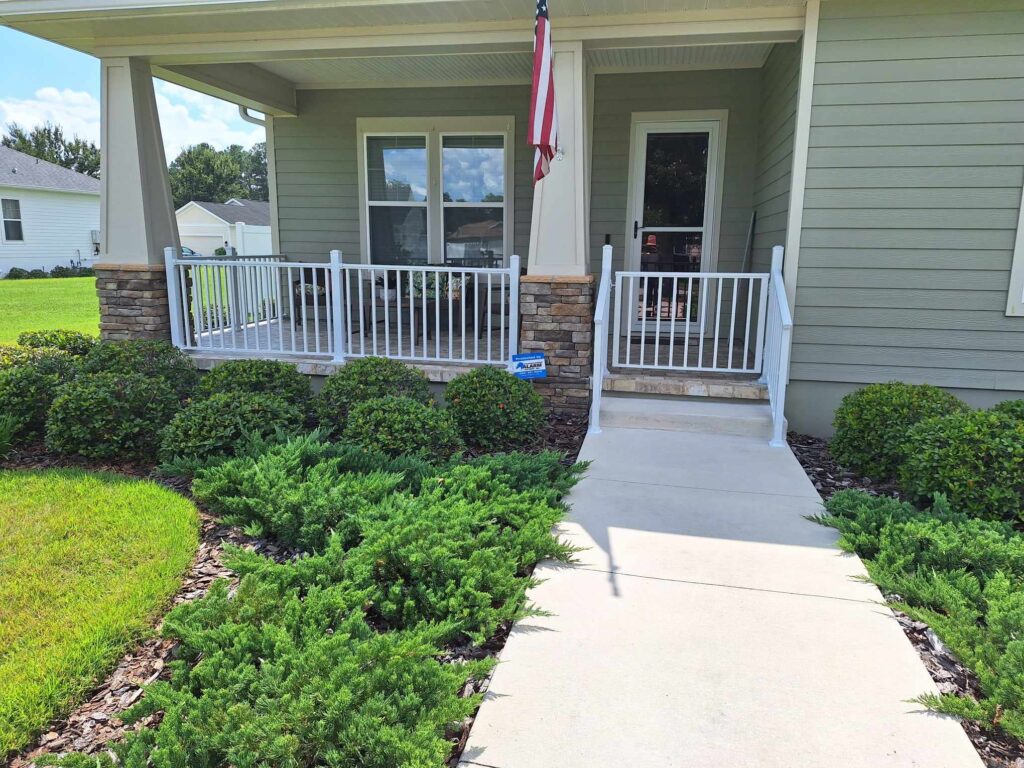
Vinyl railing is commonly used for decks, porches, balconies, and other residential outdoor spaces. Its clean appearance and low-maintenance characteristics make it attractive to homeowners looking for lasting value.
Unlike traditional wood, vinyl does not require regular painting, staining, or sealing. It also resists moisture-related deterioration, making it a practical option for Florida’s humid climate.
However, contractors should remember that not all vinyl railing products are designed for structural applications. Some systems incorporate internal reinforcement or specific mounting hardware to meet required loads. Selecting a tested, approved railing assembly is essential when safety and code compliance are priorities.
Aluminum Railing for Commercial and High-Traffic Areas
Aluminum railing is frequently selected for commercial properties, apartment communities, stairways, and elevated walkways where durability and structural performance are important.
Aluminum naturally resists rust, and protective finishes provide additional resistance to environmental exposure. Its relatively lightweight construction can also simplify handling and installation compared with heavier metal systems.
For contractors working on commercial projects, aluminum railing offers a professional appearance while maintaining visibility and open sightlines.
Both materials can be appropriate for code-compliant installations when the selected system is approved for the intended application and installed according to its specifications.
Installation Practices That Support Long-Term Safety
Even a high-quality railing system can become unsafe if it is installed incorrectly. Proper anchoring, spacing, and structural support are essential to maintaining the integrity of the finished installation.
Before beginning a railing project, contractors should evaluate several important factors:
- Post placement and anchoring: Posts must be securely attached to a supporting structure capable of resisting the required loads.
- Mounting surfaces: Wood framing, concrete, and composite decking assemblies may require different attachment methods.
- Railing height and spacing: Measurements should be checked throughout installation to maintain compliance.
- Manufacturer specifications: Approved hardware, reinforcement, and installation instructions should be followed.
- Environmental exposure: Coastal conditions, moisture, and temperature changes can influence material and hardware selection.
One common installation concern involves attaching railing posts directly to decking boards without adequate structural support. The underlying framing and connection details must be capable of transferring loads safely.
Taking these considerations into account during planning can reduce callbacks and help contractors deliver more dependable installations.
Designing Railing Systems for Florida’s Climate
Florida’s climate introduces additional challenges for outdoor railing installations. High humidity, intense sunlight, heavy rainfall, and coastal salt exposure can affect material performance over time.
Vinyl railing offers resistance to moisture and insect damage, making it a practical choice for many residential applications. Aluminum railing provides corrosion resistance and is particularly useful in coastal environments where traditional steel components may require additional protection.
However, material selection is only part of the equation. Fasteners, brackets, and mounting hardware must also be appropriate for the installation environment. Coastal projects may require enhanced corrosion protection to prevent premature deterioration.
Contractors should also account for applicable wind-load requirements, particularly in hurricane-prone areas. A railing system’s suitability depends on its tested or engineered assembly, anchorage, and installation conditions rather than the material alone.
Why Code Compliance Matters for Contractors
Meeting railing requirements protects more than the people using the finished structure. It also helps protect a contractor’s reputation and business.
Noncompliant installations can lead to failed inspections, expensive corrections, scheduling delays, and potential liability concerns. Addressing requirements before ordering materials helps avoid these problems and keeps projects moving forward.
For contractors managing multiple residential or commercial installations, establishing a consistent process for reviewing plans, confirming material specifications, and documenting installation details can improve efficiency.
Working with a knowledgeable wholesale supplier can also simplify material selection, especially when projects require specific railing styles, components, or configurations.
Sourcing Quality Railing Systems from Statewide Fence Wholesale
Reliable materials are an important part of every successful railing installation. Statewide Fence Wholesale supports contractors with vinyl and aluminum railing products for a variety of residential and commercial applications.
As Florida’s largest vinyl fence fabricator, with more than 30 years of fabrication experience, Statewide Fence Wholesale understands the importance of consistent manufacturing and dependable materials.
With physical locations in Ocala and Tampa, Florida, and delivery throughout the Southeastern United States, Statewide Fence Wholesale helps fencing companies and contractors source railing materials for projects of different sizes.