
Decking is one of the most in-demand outdoor living upgrades for homeowners across Florida and the Southeast. As a contractor, the material you recommend directly impacts project outcomes, customer satisfaction, and long-term callbacks. Understanding the real differences between composite decking and traditional wood helps you guide your clients toward the right choice for their needs and budget.
With over 30 years of fabrication and distribution experience, Statewide Fence Wholesale supplies contractors with high-quality composite decking solutions designed to hold up against Florida’s demanding climate.
Understanding the Two Materials
Before comparing performance, it helps to know what each material actually is.
Wood decking typically refers to pressure-treated lumber, cedar, or redwood. These natural materials have been the standard for decades and remain widely available. Pressure-treated pine is the most affordable option, while cedar and redwood offer naturally occurring resistance to rot and insects.
Composite decking is an engineered product made from a blend of recycled wood fibers and plastics, often topped with a protective capstock layer. Modern composites have evolved significantly from earlier generations and now offer realistic wood grain textures with improved durability.
Statewide Fence Wholesale carries Endeck composite decking, which uses a proprietary HardCover capstock that provides exceptional strength, slip resistance, and fade resistance without any wood or organic fibers in the core.
Durability and Lifespan
One of the biggest differences between composite and wood decking is how long each material lasts.
Pressure-treated wood decks typically last 10 to 15 years before boards need replacement. Even with regular maintenance, wood is susceptible to warping, cracking, splintering, and rot over time. In Florida’s humid, rain-heavy climate, these problems tend to accelerate.
Composite decking, on the other hand, is built to last 25 to 50 years depending on the product. Endeck boards are engineered to resist moisture, mold, mildew, and insect damage. Their tight cellular PVC design eliminates the voids found in many competing products, creating a stronger and more uniform board that holds up year after year.
For contractors, this difference in lifespan means fewer callbacks, stronger referrals, and a more reliable product to stand behind.
Maintenance Requirements
Maintenance is where composite decking pulls ahead in a significant way.
Wood decks require staining or sealing every one to three years to maintain their appearance and structural integrity. Homeowners who skip this maintenance often end up with decks that deteriorate faster, leading to premature replacement and potential complaints directed at the installer.
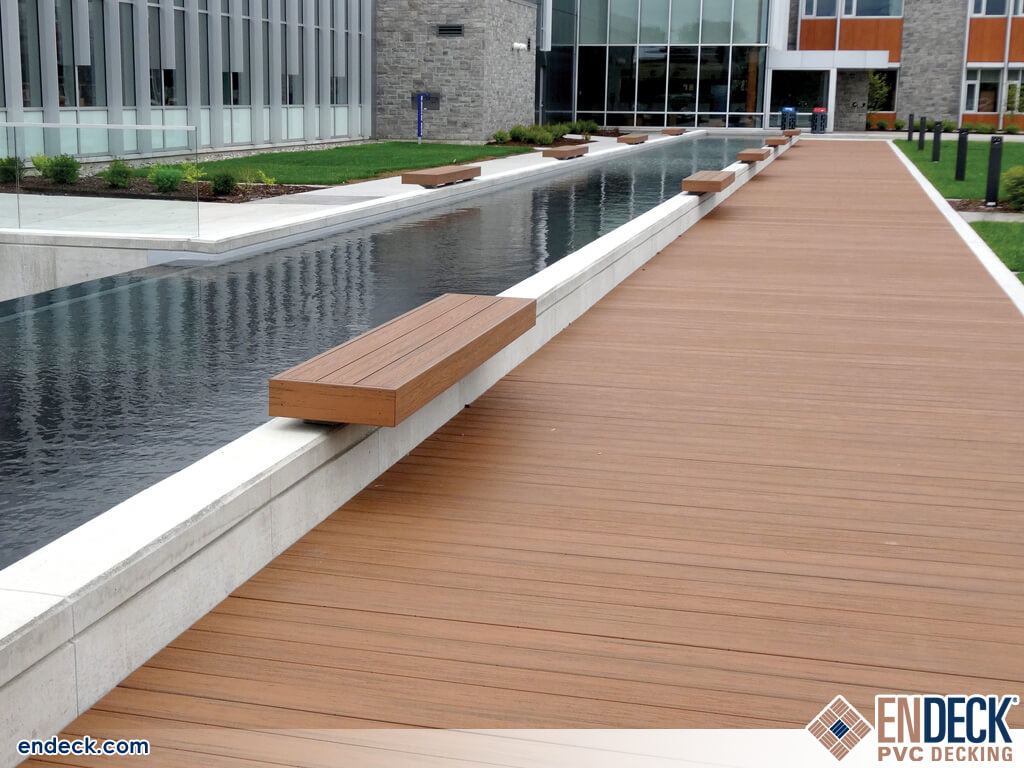
Composite decking requires almost no maintenance. A simple wash with soap and water once or twice a year is enough to keep it looking great. There is no need for staining, sealing, or sanding. For contractors, this means happier long-term clients and fewer service calls.
When you recommend composite decking, you are offering your customers a product that looks good and stays that way without ongoing effort.
Cost Comparison: Upfront vs. Long-Term
Wood decking wins on upfront cost. Pressure-treated lumber is typically the most affordable decking material available, making it attractive for budget-conscious projects.
However, composite decking offers a lower total cost of ownership when you factor in maintenance, repairs, and replacement over the life of the deck. Staining a deck can cost several hundred dollars per application, and most wood decks need it every couple of years. Over a 25-year period, those costs add up quickly.
For contractors working with homeowners who value long-term investment, composite decking is often the smarter recommendation. Presenting a clear breakdown of upfront cost versus lifetime cost helps your clients make informed decisions and positions you as a knowledgeable, trustworthy professional.
Performance in Florida's Climate
Florida’s combination of intense sun, high humidity, heavy rainfall, and coastal salt air creates a uniquely challenging environment for outdoor building materials.
Wood decking struggles under these conditions. UV exposure causes fading and cracking. Moisture promotes mold, mildew, and rot. Termites and other insects are a constant threat. Even with diligent maintenance, wood decks in Florida rarely reach the top end of their expected lifespan.
Composite decking is engineered specifically to handle these conditions. Endeck’s PVC composition means there are no organic fibers to absorb moisture, making it naturally resistant to the mold, mildew, and decay that destroy wood decks in humid climates. The HardCover capstock also provides UV protection to resist fading from Florida’s relentless sun.
For contractors building in coastal areas, composite decking is particularly valuable. It performs reliably in salt air environments where traditional materials can deteriorate rapidly.
Installation Considerations for Contractors
Both materials install using standard decking methods, but there are some differences worth noting.
Wood decking is familiar to most contractors. It can be cut, drilled, and fastened with common tools and techniques. However, wood boards often require pre-drilling, and natural variations in lumber can mean more time spent sorting, adjusting, and trimming on-site.
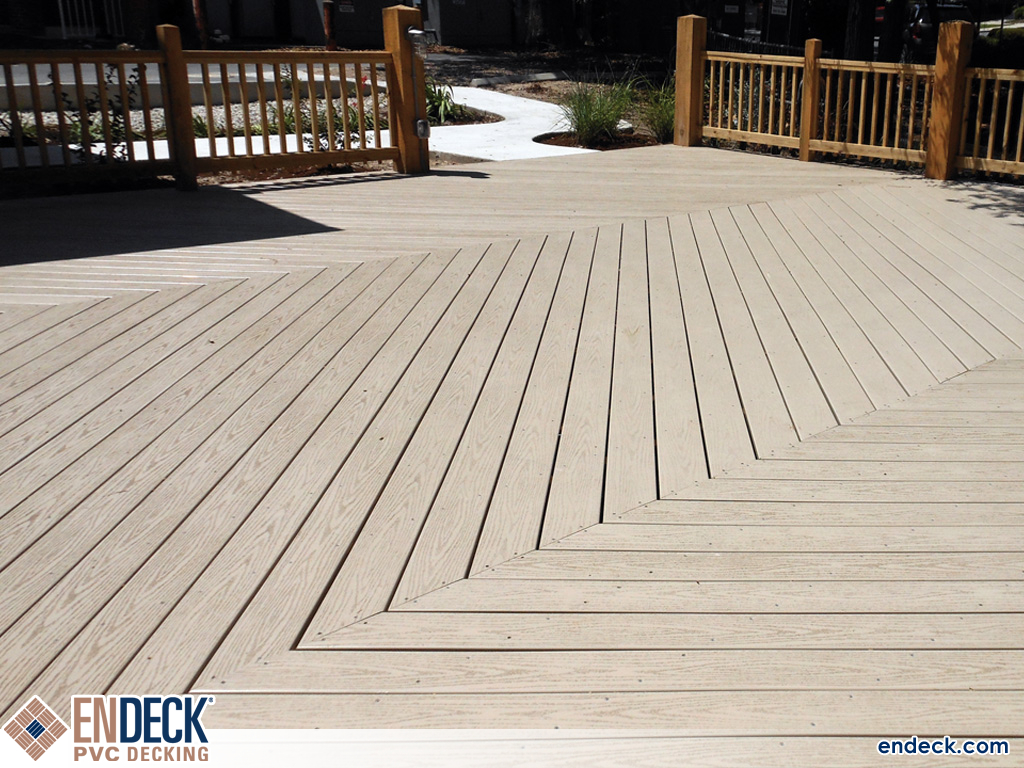
Composite decking boards from Endeck feature dual embossing on both sides, giving contractors flexibility during installation. No pre-drilling is required, which speeds up the process. The boards are also available in 12-foot, 16-foot, and 20-foot lengths, with matching fascia options for a clean, polished finish.
Another advantage for contractors is consistency. Engineered boards arrive uniform in size and quality, reducing waste and on-site adjustments compared to natural lumber.
Aesthetics and Design Options
Today’s composite decking has come a long way in terms of appearance. Modern boards feature embossed wood grain textures that closely replicate the look and feel of natural wood.
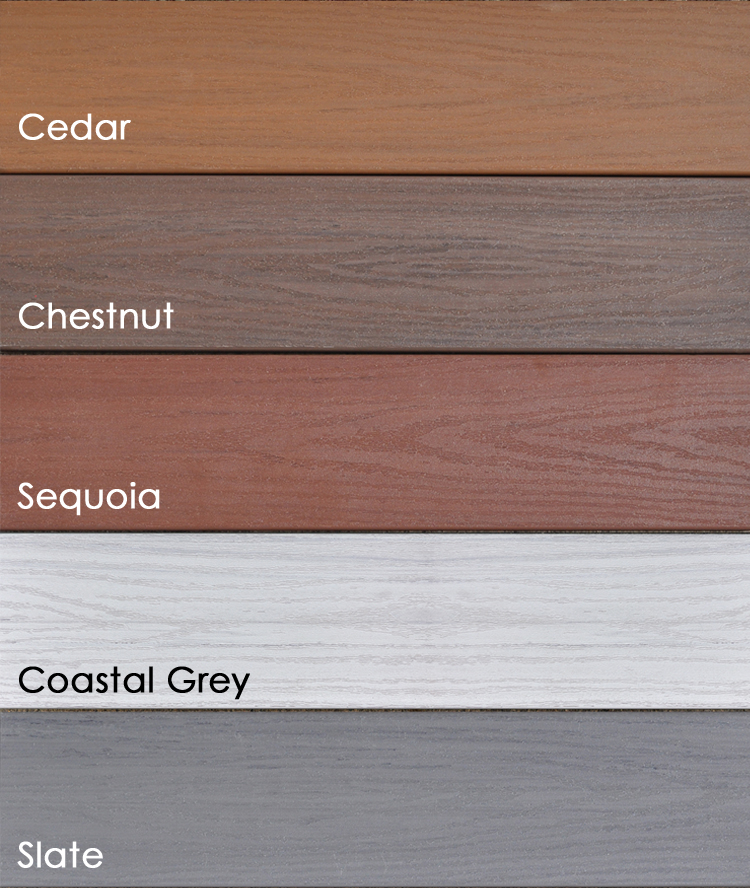
Endeck composite decking is available in seven colors across their product lines, with matching fascia boards to create a seamless, finished look. This variety gives contractors and homeowners enough options to match most design preferences without overcomplicating the selection process.
Wood decking offers a natural appearance that many homeowners appreciate. It can also be stained in virtually any color. However, that stained appearance requires regular upkeep to maintain. Composite decking delivers a consistent color from day one that stays true over time.
For contractors looking to pair decking with complementary outdoor structures like railing systems or vinyl fencing, Statewide Fence Wholesale offers a full range of products that work together for cohesive project results.
Frequently Asked Questions
Yes, for most projects. While composite costs more upfront, the elimination of staining, sealing, and early replacement makes it more cost-effective over the life of the deck. Contractors who present a total cost of ownership comparison often find that clients are willing to invest in composite.
Composite decking installs using similar methods to wood, with some differences. Endeck boards do not require pre-drilling and are available in multiple lengths for flexible installation. Most contractors find the process straightforward once they have completed a few projects.
Composite decking can retain more heat than wood in direct sunlight, especially in darker colors. However, Endeck boards are engineered to remain cooler to the touch compared to many competing composite products, making them a safer choice for families with children and pets.
Composite decking performs exceptionally well in Florida. Without wood or organic fibers, it resists moisture, mold, mildew, and insect damage. The protective capstock layer also guards against UV fading, which is critical given Florida’s intense sun exposure.
Endeck composite decking is available in seven colors with matching fascia boards. This range provides enough variety to complement a wide range of architectural styles while keeping the selection process simple for homeowners.
Yes. With warehouse locations in Ocala and Tampa, Florida, Statewide Fence Wholesale delivers throughout Florida and the Southeastern United States. Their fleet of trucks ensures timely delivery so your project stays on schedule.
Why Contractors Choose Statewide Fence Wholesale for Composite Decking
Reliable material sourcing is essential to running a successful contracting business. Statewide Fence Wholesale has spent over 30 years building a reputation for quality products and dependable service.
As Florida’s largest vinyl fence fabricator, the company also supplies a full range of outdoor building products including composite decking, aluminum fencing, railing systems, gates, and more. This makes it easy for contractors to source multiple products from a single, trusted supplier.
With locations in Ocala and Tampa and delivery available across the Southeast, Statewide Fence Wholesale is built to support contractors at every stage of a project.
Conclusion
Choosing between composite and wood decking comes down to project priorities. Wood offers a lower upfront cost and a familiar installation process, while composite delivers superior durability, minimal maintenance, and better long-term value.
For contractors working in Florida and the Southeast, composite decking is increasingly becoming the preferred recommendation. The climate demands materials that can handle moisture, heat, and UV exposure without constant upkeep.
If you are ready to offer your clients a better decking solution, contact Statewide Fence Wholesale today for wholesale pricing on Endeck composite decking. Call (877) 212-2460 or visit statewidefencefl.com/contact-us to get started.